

PV
The installation faces 3 compass directions:
East, south, west
PV strings
The PV string wiring resulted from the maximum voltage of the MPP trackers themselves and is due to the fact that every Fronius Gen24 has its own battery, which it should also be able to fill completely. Running into a limit was not an option here. We therefore have a total of 8 strings, each connected to the inverter via its own MPPT tracker.
The system achieves autonomy from mid-March to mid-October. Whether the electric cars are charging, or the air conditioning, servers and heat pump are running at the same time, everything can be operated day and night without restrictions and without buying in electricity during those months.
Battery technology 310 kWh storage
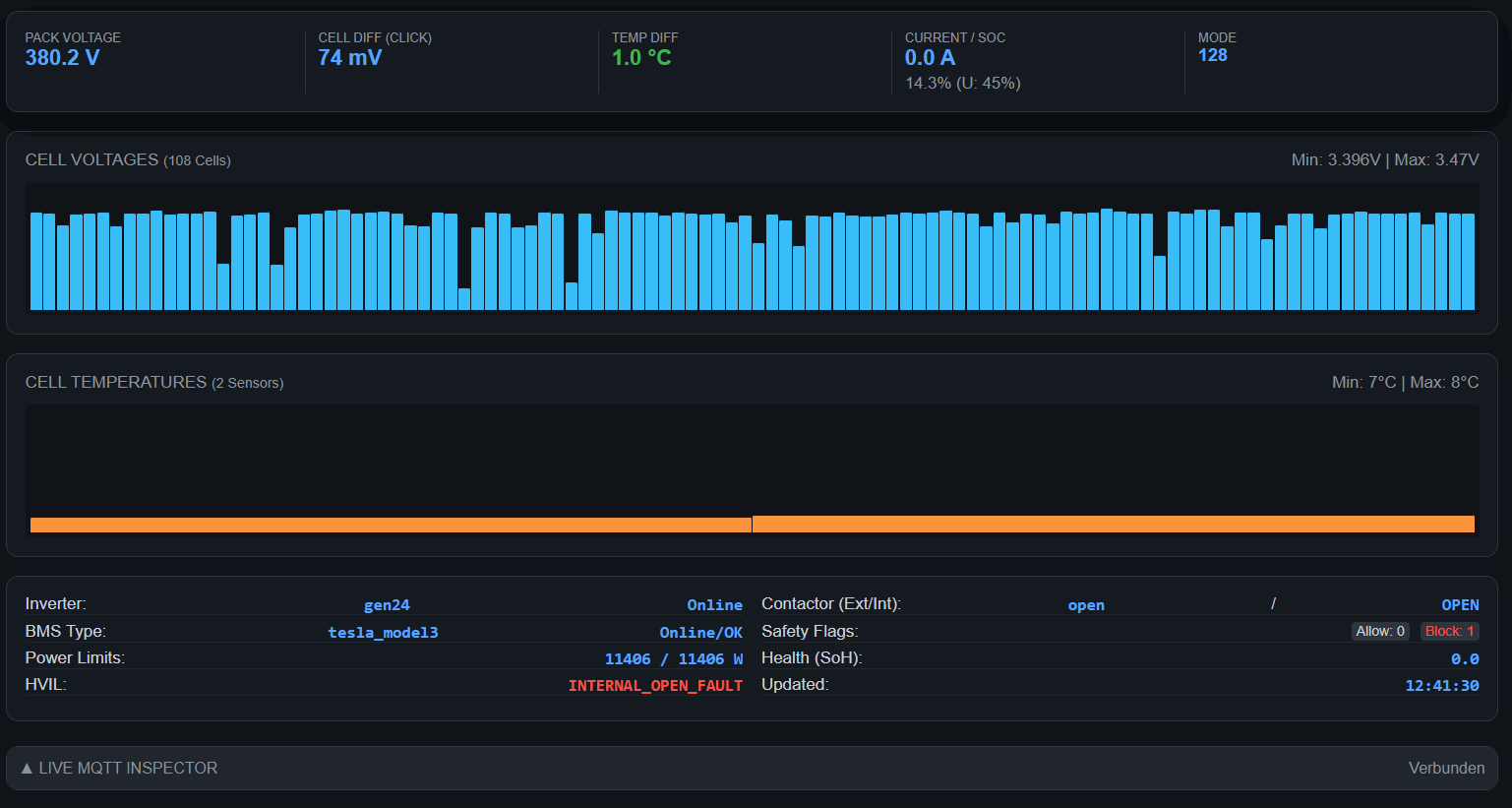
As battery storage, I deliberately decided against an off-the-shelf solution and, together with other interested people, developed a solution for using used vehicle batteries as home storage. The batteries have found a safe place in the garden without causing problems with the insurance. Pictured is moving day - into the container....

Smart meter
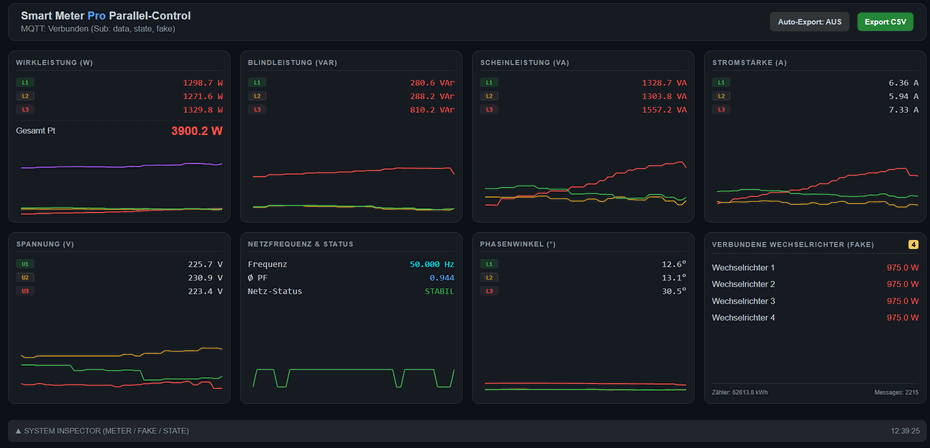
Fronius Gen24 was supposed to get a parallel operation function, but Fronius still owes us this function as of today, 14.07.2024. So a new project was born - Fake - Smartmeter.
A Raspberry Pi reads the original smart meter via Modbus, and each inverter is given only 1/4 of the real power via Modbus TCP. This way the graphs in Solarweb and the charging/discharging of the batteries are correct.
Frequently asked questions (FAQ)
40 kWp of capacity is installed, distributed across 3 compass directions (east, south, west) and divided into 8 strings, each connected via its own MPP tracker are connected to the inverters. This achieves autonomy from mid-March to mid-October.
Instead of an off-the-shelf storage solution, used vehicle batteries were made usable as home storage together with other interested people and housed safely in a container in the garden, without problems with the insurance.
Because the Fronius Gen24 inverters do not support true parallel operation, a Raspberry Pi reads via Modbus the original smart meter and passes only a quarter of the real power to each inverter via Modbus TCP, so that the display and battery charging are correct.